PREVIOUS ARTICLE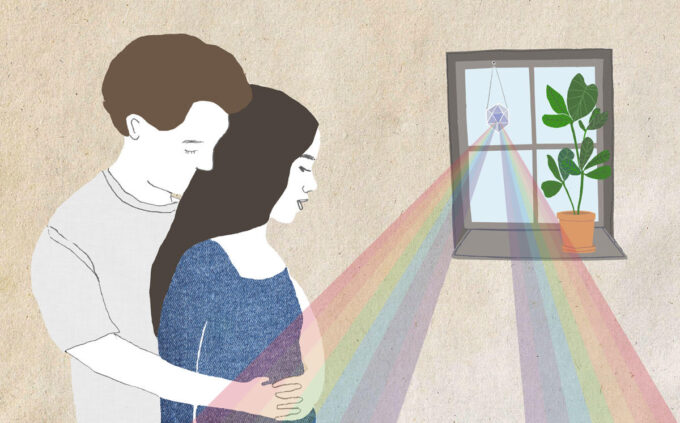
Photographer Catalina Kulczar-Marin‘s first pregnancy was the opposite of everything she expected. Here’s her story…
The year 2014 started and ended in death. It was just that kind of year.
My stepfather and my mom were about to celebrate their 27th anniversary when he suffered a fatal stroke. I was six when they married, and even though he wasn’t my biological father, he’d always been my dad.
To cope with our loss, my husband Juan Miguel and I slowed our lives down. We moved sluggishly and socialized less. The rhythm of our voices fell behind their usual beat. But we also began talking about starting our own family. Though we’d lost a life, perhaps we could make a new one.
I was 35 when I sought out a fertility specialist. I had been having difficulty conceiving; I was still mourning; and I felt lost. But before our first fertility appointment, miraculously, I found out I was pregnant. What’s more, we were pregnant with twins.
The good news lifted our spirits, and we spent Thanksgiving out of town with friends and family. At the dinner table, we celebrated life, death and love. Our friends offered best wishes for a healthy pregnancy. We were full of optimism for our twins.
Even though I wasn’t at high risk for birth defects, Juan Miguel and I wanted to take every precaution. We decided I would have an amniocentesis. I was 16 weeks pregnant, and we arrived at the hospital feeling hopeful. During the pre-procedure sonogram, I searched the monitor, watching intently as the technicians measured each baby head to rump. But unlike past visits, one of them measured significantly longer and weighed more than the other. I didn’t think much of it, although the technician spent a lot of time roving the sonogram wand over the tight skin of my belly.
We relocated to another room for the amnio. The doctor took what felt like forever choosing where to insert the needles. “Is everything all right?” I asked, starting to feel uneasy. He couldn’t locate a second placenta, he said, and twin pregnancies with single placentas are more likely to have complications.
After the test, the doctor suggested we see experts for further evaluation. Two days later, back in an exam room, I admired our twins from the monitor. The screen looked like a weather forecast. Rainbow colors swirled together as the wand rolled over their body parts; red spots lit up when the technician moved between their tiny heads and even smaller hearts. She barely spoke a word. Next, the doctor scanned my belly and reviewed the technician’s notes. He was searching for something.
After I got dressed, we met with the doctor in his conference room. The twins, he explained, shared a placenta and had a severe version of Twin-to-Twin Transfusion Syndrome. One baby was getting too much blood flow, while the other wasn’t getting enough. Later we’d learn that the dire progression of their condition from the time of the amniocentesis to the next sonogram — just two days — was remarkably fast.
We were told that, in our case, the chance was slim that either one would would survive, let alone live and grow healthily (if one twin did survive, he said, it would probably have severe neurological defects, among other complications). After much thought and tearful discussion, we made the most difficult decision of our lives. We would terminate the pregnancy.
Surgery, at the earliest, would be the following Friday, a full seven days from when we’d been faced with our grueling reality. They have a word for aeons such as this: Purgatory.
I couldn’t stand the thought of sleeping in our bed so we camped in the living room for the whole week. We cried and slept. I couldn’t touch my belly and denied Juan Miguel the same. We slowly said goodbye to our twins.
During this time, a friend gave us a small prism. It threw rainbows on the wall each time the sun glinted its angles. It was the only brightness we would see for months.
A week later, when we entered the fluorescent-lit hospital for our 6 a.m. appointment. I’d asked to hear David Byrne’s music during my procedure. “This Must Be The Place” was playing as I fell into a medically induced sleep.
I was insatiable when I woke up. No amount of water could quench my thirst, and hunger overcame me. My good friend Jessica was waiting for me next to the bed. Professionally, she guides women after they terminate a pregnancy. She held my hand and wiped my torrent of tears. She helped me dress and gave me water. Although I didn’t feel any physical pain and I was home by noon. But I was utterly broken.
Six days later my family and Juan Miguel and I would gather together for Christmas, but we did not celebrate. Tensions were high and my mood was low.
My darkest moment came on Christmas Eve. The immeasurable heap of sadness that I’d been carrying cracked open, flushing me into the dark waters of an emotional meltdown. After unraveling in front of my family, I walked alone to a pier in Greenpoint, Brooklyn. It jutted just far enough over the East River for me to picture what it might feel like to let the ice cold water envelop me whole. Wrapped in my puffy coat, I imagined myself like a Medjool date sinking to the bottom of a glass of milk. I needed to shed this skin. I imagined that I’d climb out of my coat and would be left a seed, settling with an effortless “thump” on the river floor. I’d be untethered by this life and free from my nightmare. Blackness would wash over my eyes. I’d be finished with this brand of sorrow.
In my heart I’d already hit rock bottom. But even in the darkness, a dim light flickered inside me. I couldn’t see it, but I knew it was there. Jumping was not the answer.
After the holiday, all I wanted to do was run. I bought new running shoes. Hitting the pavement gave me strength and control. So I hit it hard. I beat the shit out of it. It was my catharsis. Even on frigid January days, I ran to release my grief.
When I started getting my period again eight weeks later, it was a sign of life, even if it was also a haunting reminder of what we’d lost. We went to Costa Rica for a work conference. On the final day, as we all gathered at the beach, one of the speakers’ teenage daughters approached me. “Catalina, can I come to your baby shower?” she asked. We all fell silent. Taken aback, I said “Sure.”
“She is clairvoyant,” the girl’s father explained to me later, “and this is not the first time she’s predicted something of this nature.”
A month later, I took a pregnancy test at Juan Miguel’s suggestion. I’d been significantly more emotional than usual and hormonal to a degree that was quite foreign to him.
“PREGNANT” appeared to us in black digital letters.
No, that couldn’t be right. We waited a week to take another test.
“PREGNANT.” We had conceived in Costa Rica.
We were simultaneously thrilled and terrified to be pregnant so soon after losing the twins. We guarded our hearts closely. But it was a textbook pregnancy. On Tuesday, December 15, 2015, at 4:34 a.m., almost exactly a year after we’d said goodbye to our twins, Pia made her early morning entrance into the world. There she was, in all her healthy glory, our beautiful baby girl — conceived during a time of sorrow, born into sheer joy. We’d come full circle.
That rainbow maker prism now hangs in our bedroom window. Before Pia was born, each time the rainbows appeared I would burst into tears. It was an agonizing reminder of the twins we had never met. Now when the sun slips its way through the mirrored glass, I smile. I say hello to our angels and I tell Pia that her older siblings are in the room looking out for her.
I’ve always believed that the universe doesn’t give us more than we can handle. There must have been a reason for our struggle. If it weren’t for the twins and our immensely difficult decision, we wouldn’t have Pia. Above all, I’m grateful to move forward, the three of us together.
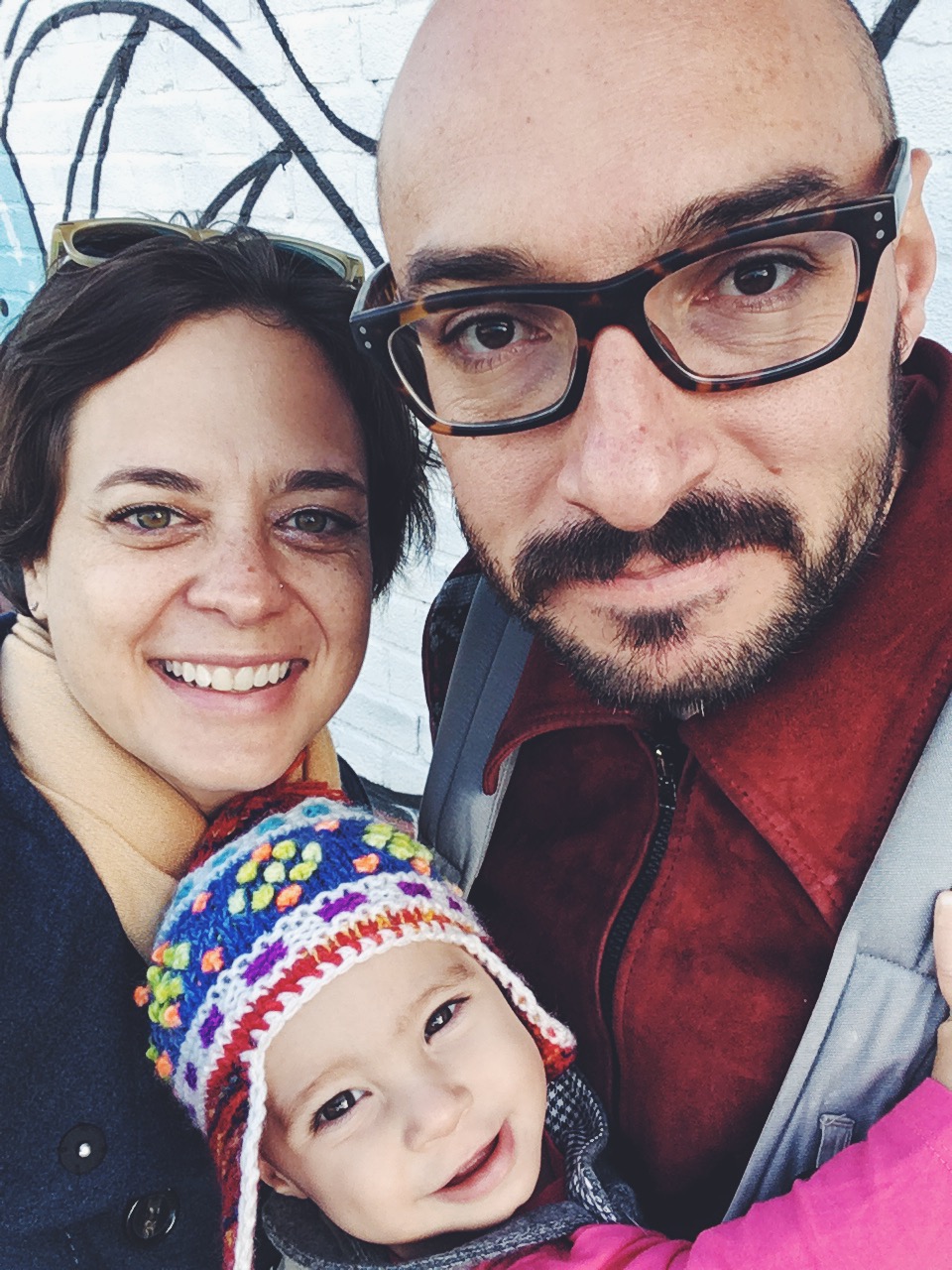
Catalina, Juan Miguel and Pia.
Thank you so much for sharing this essay, Catalina. Sending a huge hug today to those who’ve had similar experiences.
P.S. On experiencing a stillbirth and three womens’ stories of miscarriage.
(Thanks to Catalina’s friend, Deenie Hartzog-Mislock, for contributing editing to this essay. Illustration by Alessandra Olanow for Cup of Jo.)